
Bryggen in Bergen: History, Hidden Passages and What Not to Miss

Bryggen in Bergen is the row of colourful wooden buildings along the harbour, and one of Norway's best known UNESCO World Heritage Sites. Hanseatic merchants traded here for almost 400 years, and behind the facades you will find narrow passages, galleries and workshops. Bryggen is free to visit and right in the city centre.
Stay at Bergen Børs Hotel, a few minutes from Bryggen
Why Bryggen is a World Heritage Site
Bryggen was added to the UNESCO World Heritage List in 1979. It is the only one of the Hanseatic League's four overseas trading offices still standing.
Bergen was already a trading town in the 1100s. Around 1350 the Hanseatic League, a powerful network of German merchant cities, set up its office here, and for centuries its merchants controlled the stockfish trade from Northern Norway. In 1754 Bryggen became a Norwegian trading post.
Fire has struck Bryggen again and again. Most of what you see today was rebuilt after the fire of 1702, following the same layout and methods as before. The last major fire was in 1955. Around 62 buildings remain, roughly a quarter of what once stood here.
What you will see
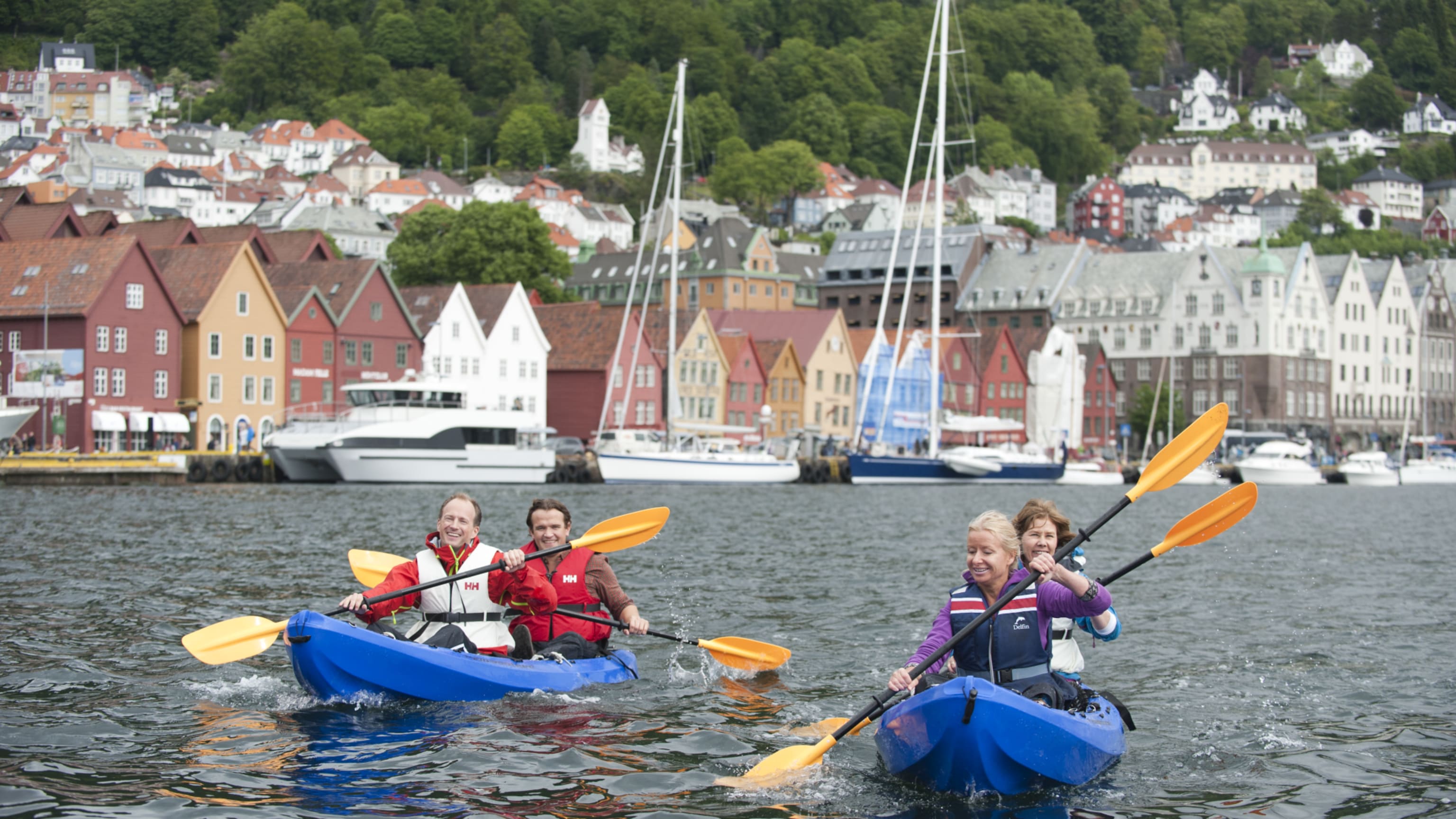
From the harbour you see the facades: the pointed gables in red, yellow and white that appear on almost every postcard of Bergen. It is the classic view, but it is only the start.
Behind each facade runs a long row of buildings, stretching back from the quay. This is where merchants lived, worked and stored their goods. The walls lean, the floors creak, and the planks underfoot are worn by centuries of footsteps.
Look for the details: old hoists, settled beams and signs hanging over narrow doorways. Since 2000, the Bryggen Project has restored the buildings using original methods and materials wherever possible, so what you see is real craftsmanship, not a stage set.
Bryggen changes with the seasons. In summer the quay is busy with people and outdoor tables. On a dark December evening, with lights in the windows and rain on the cobbles, it is arguably even more beautiful. Walk along the harbour after dinner, when most visitors have left, and watch the facades reflected in the water.
The passages behind the facades
The passages are Bryggen's best kept secret. These narrow wooden walkways run between the rows of houses, and the moment you step in, the noise of the harbour fades.
Jewellers, artists and textile designers work in small studios and galleries along the passages. You can watch them at work and often buy straight from the person who made the piece. It is the place to find something better than the usual souvenirs, such as jewellery, ceramics or textiles made a few metres away. Many studios are tiny and opening hours vary, so take it as it comes.
Our best tip: come early in the morning or late in the evening. In the middle of a summer day it gets crowded, and visitors are encouraged to choose quieter hours. Come early and you will have the courtyards almost to yourself, with the best light between the houses.
Museums at Bryggen
To understand what you are looking at, visit one of the museums:
Bryggens Museum at Dreggsallmenningen 3 is built over the remains of the city's oldest houses from the 1100s, on the site cleared by the 1955 fire. See runic sticks and finds from the medieval town. Open all year, NOK 170, free under 18.
The Hanseatic Museum and Schøtstuene tell the story of the German merchants. Finnegården on Bryggen is being restored and is expected to reopen in early 2027 [SJEKK: dato for gjenåpning er ikke annonsert]. Schøtstuene at Øvregaten 50 is open daily 10:00-18:00 from May to October.
The Troll Museum at Øvre Dreggsallmenningen 6, just behind Bryggen, is a good choice with kids.
[SJEKK: vinteråpningstider for Bryggens Museum og Schøtstuene]. See all our picks in the guide to museums in Bergen.
Shops and places to eat
When the old trade ended, craftspeople moved in from the 1960s, followed later by restaurants. Today Bryggen mixes craft and design shops, galleries, cafés and restaurants.
On Bryggen itself you will find Enhjørningen, known for seafood, and To Kokker in one of the old wharf buildings. Bryggeloftet & Stuene serves Norwegian food in the middle of Bryggen.
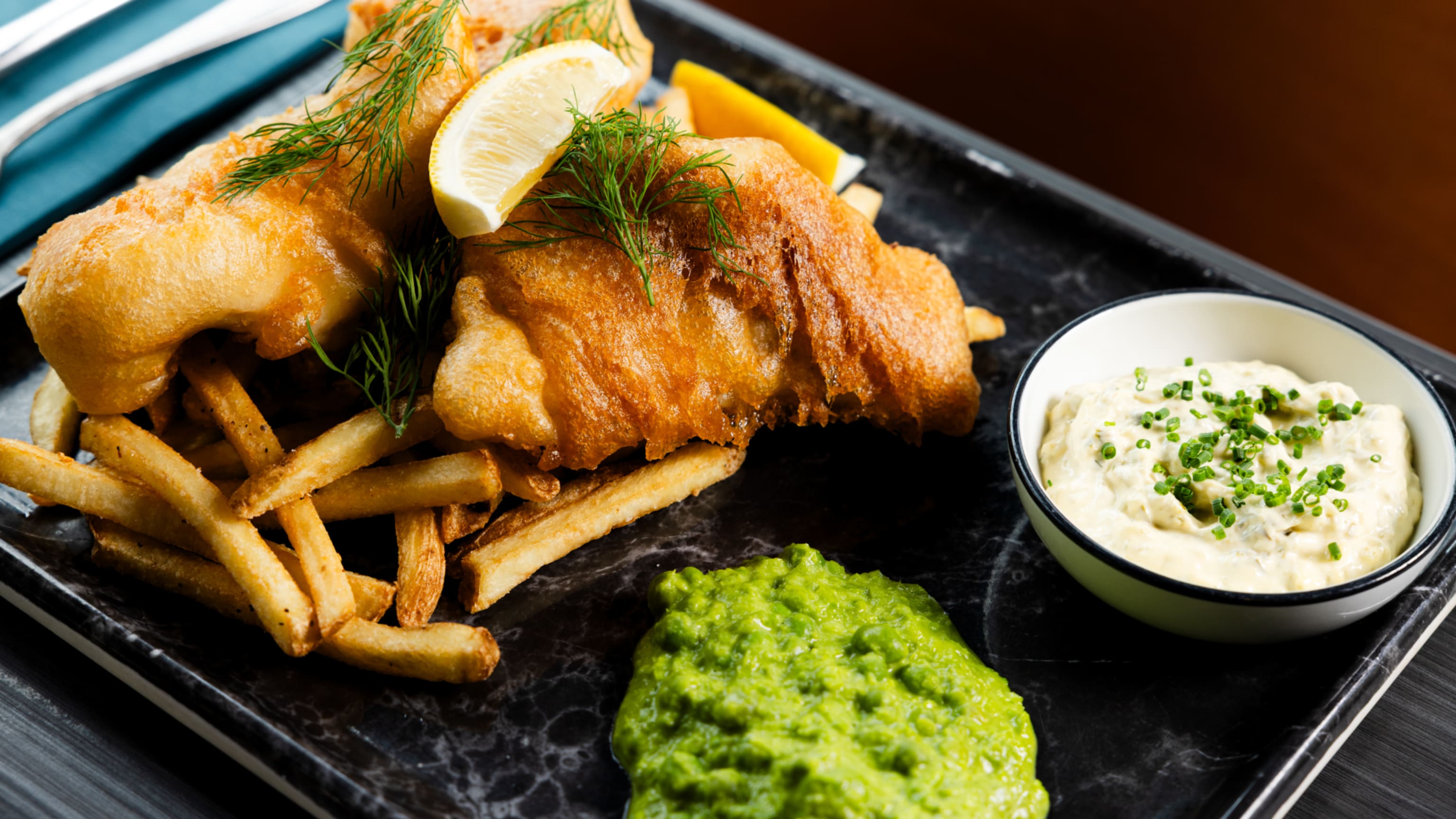
For a view of Bryggen while you eat, cross over to Bjerck at Torgallmenningen. Its big windows look straight across to Bryggen, the harbour and Mount Fløyen, and it serves some of the best known fish and chips in the city. Bjerck is open daily from lunchtime, for a quick bite or a long evening.


Practical tips for visiting Bryggen
Cost: Walking around Bryggen and its passages is free. You only pay for museums, shopping and food.
Toilets: There are no toilets on Bryggen, so plan a stop at a café or museum.
Accessibility: The cobbles in front are hard going with a light wheelchair or pram, while the wooden walkways are easier. Most shops and galleries have narrow doors and steps.
Timing: Early mornings and evenings are calmest, especially in summer.
Weather: The wooden planks get slippery in the rain, which is often. Wear shoes with good grip.
Nearby: The Fish Market, Bergenhus Fortress and the Fløibanen funicular are a few minutes' walk away. See Bryggen from above on Mount Fløyen, in our guide to the Bergen city mountains.
Bryggen through local eyes
For people in Bergen, Bryggen is more than a sight. It is where the city began. Our art curator Åshild Grana calls the city centre her favourite place in Bergen, and says the harbour is what binds the city together.
Around the harbour stood churches, monasteries, royal halls, trading houses and warehouses, and people traded in German, Dutch and many Norwegian dialects. Those names survive in the streets and buildings. Her advice: walk down to the harbour often, grab a fish cake and feel history meet the life of the city today.
Read the full interview: why Bergen city centre is Åshild's favourite place.
Where to stay near Bryggen
Bryggen is at its best when you can walk there before the tour groups arrive and come back after they leave. Staying in the centre makes that easy.
Bergen Børs Hotel is in the city's former stock exchange, just steps from the Fish Market, Bryggen and Torgallmenningen. In the same building you will find Frescohallen beneath Axel Revold's frescoes, the tapas bar Fresquito and Áurea Nikkei. Have breakfast, walk the passages before the crowds and be back before the city wakes up.
For more ideas nearby, see our guide to things to do in Bergen.
Frequently asked questions
Why is Bryggen a UNESCO World Heritage Site?
Bryggen is a UNESCO World Heritage Site because it is the only surviving one of the Hanseatic League's four overseas trading offices. It was listed in 1979. The buildings show how merchants lived, worked and stored goods in a medieval trading town, and they were rebuilt in the same pattern after each fire, most recently after 1702.
How old are the buildings at Bryggen?
Most of the buildings at Bryggen were rebuilt after the great fire of 1702, but they follow a layout that is far older. Beneath the ground lie remains of the city's oldest houses from the 1100s, which you can see at Bryggens Museum. Around 62 buildings remain today, roughly a quarter of the original Bryggen.
Is it free to visit Bryggen?
Yes, walking around Bryggen and through the passages behind the facades is free. You only pay to enter a museum, to shop or to eat. Bryggens Museum costs NOK 170 for adults, and visitors under 18 go free. Schøtstuene, part of the Hanseatic Museum, costs NOK 160 including a guided tour.
Are there toilets at Bryggen?
No, there are no public toilets on Bryggen itself. Plan a break at a café, a restaurant or one of the nearby museums, such as Bryggens Museum. The Fish Market and Torgallmenningen are a few minutes' walk away, with plenty of places to sit down, many of them with a view across the harbour to Bryggen.
How long do you need at Bryggen?
One hour is enough for a relaxed walk along the facades and through a few of the passages at Bryggen. Add Bryggens Museum or Schøtstuene and you should allow two to three hours. Many visitors combine Bryggen with the Fish Market and the Fløibanen funicular in the same morning, since everything is within a few minutes' walk.
Bryggen is at its most beautiful early in the morning, before the city wakes up. Stay a few minutes away and be there first.
Our hotels in Bergen city centre


More inspiration from Bergen
Bergen Fish Market
The Bergen Fish Market is an open air market in summer and an indoor food hall all year. Here are the opening hours, what to try and how to get good value.

Museums in Bergen
From Munch at KODE to the medieval town beneath Bryggen and the whale skeletons of the Natural History Museum. These are the Bergen museums worth your time, with hours and prices.

Churches in Bergen
Bergen has 12th century churches, a stave church and the city's tallest tower. Here is the history, the opening hours and how to see them in a day.
Welcome,
What can I help you with?
A digital AI concierge from De Bergenske. Mistakes can occur.